Focus and Concentration Tips for Students
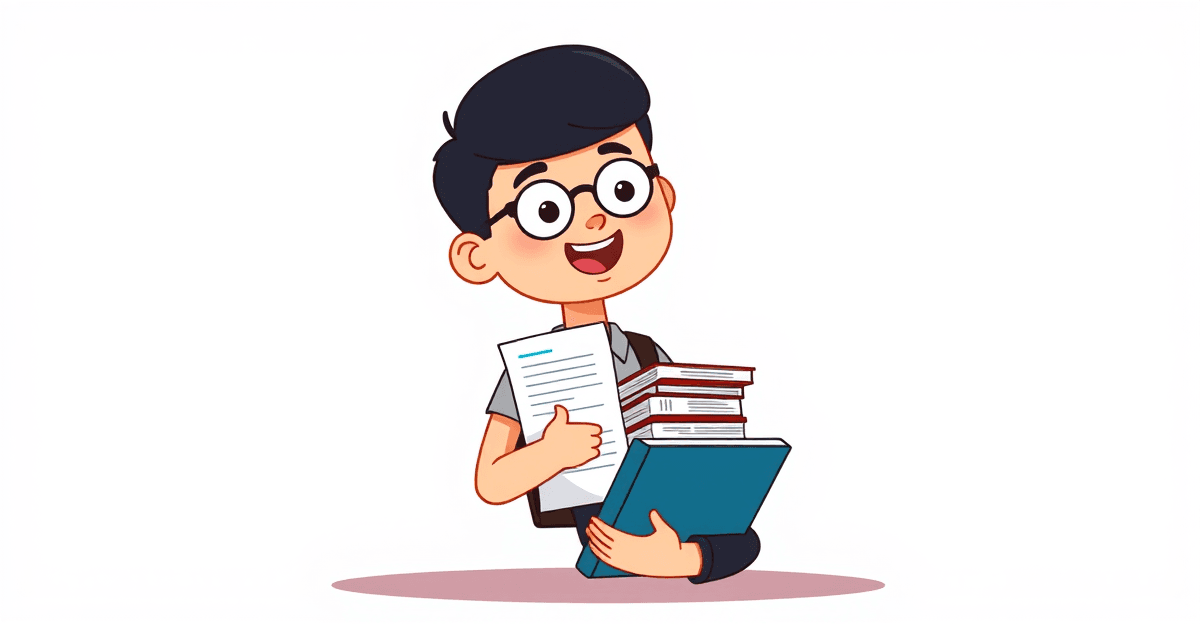
Focus and Concentration Tips for Students
If your child reads the same Maths question five times and still hasn't started, you already know the problem isn't intelligence — it's focus and concentration. Across Singapore, parents tell us the same story: a bright child sits at the study table for two hours but absorbs barely thirty minutes of real work. The good news is that concentration is a skill, not a fixed trait, and it can be trained with the right routines, environment and support — the same way we'd approach any Singapore tuition goal. This guide walks you through what actually works for students sitting the PSLE, O-Levels and A-Levels.
> Key takeaway (TL;DR): A child's focus span is roughly 2-3 minutes per year of age, so structure study in short blocks (25 minutes for upper primary, 40-50 for secondary) with real breaks. Remove the phone from the room, protect sleep (9–11 hours for primary-age children, 8–10 for secondary), and fix any underlying comprehension gaps — a "distracted" child is often a confused one. When self-study stalls, a verified one-to-one tutor can rebuild both understanding and concentration.
Why focus and concentration matter more in Singapore's system
Singapore's academic milestones are unusually dense. Between Primary 1 and Secondary 4, a child sits high-stakes national examinations — the PSLE at 12 and the O-Levels at 16 — that shape secondary and post-secondary pathways. The MOE curriculum rewards consistent, cumulative mastery rather than last-minute cramming, which means the ability to focus and concentrate day after day directly affects results.
Here's a definitive point worth remembering: focused, distraction-free study consistently beats longer unfocused study. A student who completes 90 minutes of genuinely concentrated revision will out-perform one who spends three distracted hours half-watching a screen. Under PSLE's Achievement Level (AL) scoring system — fully in place since 2021 — where every paper counts toward AL1-AL8 bands, the efficiency of each study session matters more than its length.
If you're still deciding how your child should study, our comparison of group tuition vs private tuition explains which format suits children who struggle to focus on their own.
How long can a student actually concentrate?
Direct answer: Most children sustain deep focus for about 2-3 minutes per year of age. That means a 9-year-old preparing for PSLE manages roughly 18-27 minutes before attention drifts, while a 15-year-old can hold 40-50 minutes. Designing study around these natural limits — rather than fighting them — is the single biggest fix most families can make.
The most reliable structure is the Pomodoro technique:
- Upper primary (P4-P6): 25 minutes focused work, 5 minutes break
- Lower secondary (Sec 1-2): 30-40 minutes work, 5-10 minutes break
- Upper secondary & JC: 45-50 minutes work, 10 minutes break
- After four cycles, take a longer 20-30 minute break
During breaks, encourage movement, water or a snack — not a phone. Scrolling for "just five minutes" hijacks the dopamine reward system and makes returning to a Science worksheet feel like punishment. For more habit-level structure, our 10 study tips for secondary school students pairs well with this approach.
Building a focus and concentration routine that sticks
Snippet summary: The strongest predictor of a child's focus isn't willpower — it's environment and routine. Fix the study space, the schedule and the sleep, and concentration improves before you've changed anything about the child.
1. Engineer a distraction-free study space
A dedicated desk, good lighting and a clear surface signal to the brain that it's time to work. Keep the phone in a different room — research on "attention residue" shows that even a silent phone face-down on the table measurably reduces concentration. In smaller HDB flats where a private room isn't possible, a consistent corner of the dining table, used only for study, works surprisingly well.
2. Protect sleep — it is non-negotiable
Singapore students are chronically sleep-deprived. Research shows that 65% of primary school children (ages 7–12) fall short of the recommended 9–11 hours on school nights, while secondary students fare worse — an estimated 85% average just 6.5 hours on weekdays. Yet sleep is when the brain consolidates the day's learning. A well-rested child concentrates far better than a tutored but exhausted one. Aim for 9–11 hours for primary, 8–10 for secondary, and enforce a screen-free buffer before bed — blue light delays the melatonin that signals sleep.
3. Work with the brain's energy clock
Most students focus best in the late afternoon and early evening, after the post-school slump but before fatigue sets in. Schedule the hardest subject — often Maths or Science — in that window, and save lighter review for when energy dips. Tackling PSLE Maths preparation at peak focus, for instance, yields far more than grinding through it at 10pm.
4. Replace passive reading with active recall
Re-reading notes feels productive but builds weak focus because the brain isn't challenged. Active recall — closing the book and writing down what you remember, doing practice papers, or teaching a concept aloud — forces engagement and keeps attention anchored. This is especially powerful for content-heavy subjects and for O-Level subject preparation.
Managing screens, games and digital distraction
Direct answer: You don't need to ban devices, but you do need to make focused study the easier default. The most effective rule in most homes is simple: phones live outside the study room during work blocks, and screens switch off 30-60 minutes before bed.
Constant app-switching trains the brain to expect novelty every few seconds, which is the exact opposite of the sustained attention a 50-minute exam paper demands. Practical guardrails that work for Singapore families include:
- A shared "phone parking" spot during homework hours
- App timers or Focus modes on the child's device
- Agreed gaming windows after study blocks, as a reward rather than a distraction
- Modelling it yourself — children focus better when parents aren't scrolling nearby
For younger siblings in K1-K2 who are just building attention spans, structured learning apps such as QuizKin offer short, adaptive quizzes that channel screen time into focused practice rather than passive scrolling.
When poor focus is really a learning gap
This is the insight many parents miss: a child who "can't concentrate" is very often a child who doesn't understand the work. Nobody can focus on a problem sum they have no idea how to start. Distraction becomes an escape. Before assuming an attention problem, check whether the underlying concept is solid.
This is where targeted help makes the biggest difference. A one-to-one tutor quickly identifies whether the issue is attention or comprehension, then rebuilds the foundation in short, structured steps that hold a child's focus. If your child drifts off during primary Maths model drawing or freezes on Additional Maths, the fix is usually clarity, not discipline.
TuitionLah lets you browse and contact verified tutors directly — so you can match your child with someone whose teaching style keeps them engaged. Rates vary depending on tutor background, level, and subject — you can compare profiles and reach out directly on TuitionLah. For struggling concentration specifically, consistency matters more than the highest rate — a steady weekly session that a child actually engages with beats an expensive tutor they tune out.
If you're weighing your options, our breakdown of tuition centre vs freelance tutor helps you decide which setting best supports a child who needs more focused attention. And for English specifically, primary school English tuition can turn passive reading into the active engagement that builds concentration.
Subject-specific focus strategies
Snippet summary: Different subjects demand different kinds of attention. Maths needs sustained problem-solving focus; languages need spaced, frequent practice; oral exams need short, confident bursts of attention under pressure.
- Maths & Science: Use longer focused blocks for problem-solving, and keep a "stuck list" so a child moves on instead of stalling. Find a Maths tutor or Science tutor who teaches method, not just answers.
- English & Mother Tongue: Short, daily exposure beats long weekly sessions. Ten focused minutes of reading or vocabulary every day builds more than a two-hour Sunday block. Explore English and Chinese tutors who emphasise active practice.
- Oral examinations: These reward calm, focused delivery in short bursts. Our O-Level English oral tips show how to channel nerves into concentrated performance.
New tools are also reshaping how students practise focus — see our piece on AI tutoring in Singapore for how adaptive technology can hold attention through instant feedback. And if cost is a concern, you can sometimes find education and student discounts on WhyNotDeals to make consistent support more affordable.
A simple weekly focus plan
Put it together and a realistic week looks like this:
1. Fixed study window at the child's peak-focus time, same slot daily 2. Pomodoro blocks sized to age, with movement breaks 3. Phone parked outside the room during every block 4. Active recall — practice papers and self-testing, not re-reading 5. 9–11 hours sleep (primary) / 8–10 hours (secondary), screens off before bed 6. One weekly review of what felt hard — the early-warning sign of a learning gap to address with a tutor
Concentration won't transform overnight, but within two to three weeks most families notice the study table feels lighter — less nagging, more done. Start with one change, not all six. Often, removing the phone and right-sizing the study blocks is enough to unlock the rest.
Sources
1. MOE — PSLE Scoring (Achievement Levels) 2. Ministry of Education Singapore — Official Website 3. HealthHub Singapore (MOH) — Sleep and Children's Health 4. Health Promotion Board — Screen Time and Wellbeing Guidance 5. SingHealth — Children's Sleep Needs and Healthy Sleep Habits 6. CDC — How Much Sleep Do I Need? 7. TuitionLah — Find Verified Tutors in Singapore
Frequently Asked Questions
How long can a Singapore primary school child realistically concentrate?
Research suggests a child can focus for roughly 2-3 minutes per year of age, so a 9-year-old manages about 18-27 minutes of deep focus before needing a break. For PSLE-level study, aim for 25-minute focused blocks with 5-minute breaks (the Pomodoro method). Secondary students can stretch to 40-50 minute blocks. Trying to force a 2-hour straight study marathon usually backfires and reduces retention.
Does screen time really affect my child's concentration?
Yes — frequent task-switching between apps, videos and games trains the brain to crave constant novelty, which makes sustained focus on a single Maths worksheet feel harder. A useful rule is no phones within reach during study blocks and a 30-60 minute screen-free buffer before bedtime to protect sleep. You don't need to ban devices entirely; you need to make focused study the easier default by removing the phone from the room.
Can a tutor help if my child simply cannot concentrate?
Often yes. A good tutor breaks work into shorter, structured segments, provides immediate feedback that keeps a child engaged, and removes the household distractions of self-study. One-to-one attention also surfaces whether poor focus is actually a comprehension gap — a child who doesn't understand fractions will look 'distracted' when they're really lost. On TuitionLah you can find and contact verified tutors directly, matching by subject and teaching style.
Related Articles
Study Planner Template for Singapore Students
Free study planner template for Singapore students — organise PSLE, O-Level and A-Level revision with a weekly schedule that actually works. Start today.
Concept Mapping for Singapore Students
Concept mapping for Singapore students: a practical guide to building visual study maps for PSLE, O-Level and A-Level success. Tips, examples and rates.
Summary Writing Skills for Singapore Students
Master summary writing skills for Singapore students. Practical PSLE & O-Level techniques, common mistakes to avoid, and how to score full marks on comprehension summaries.